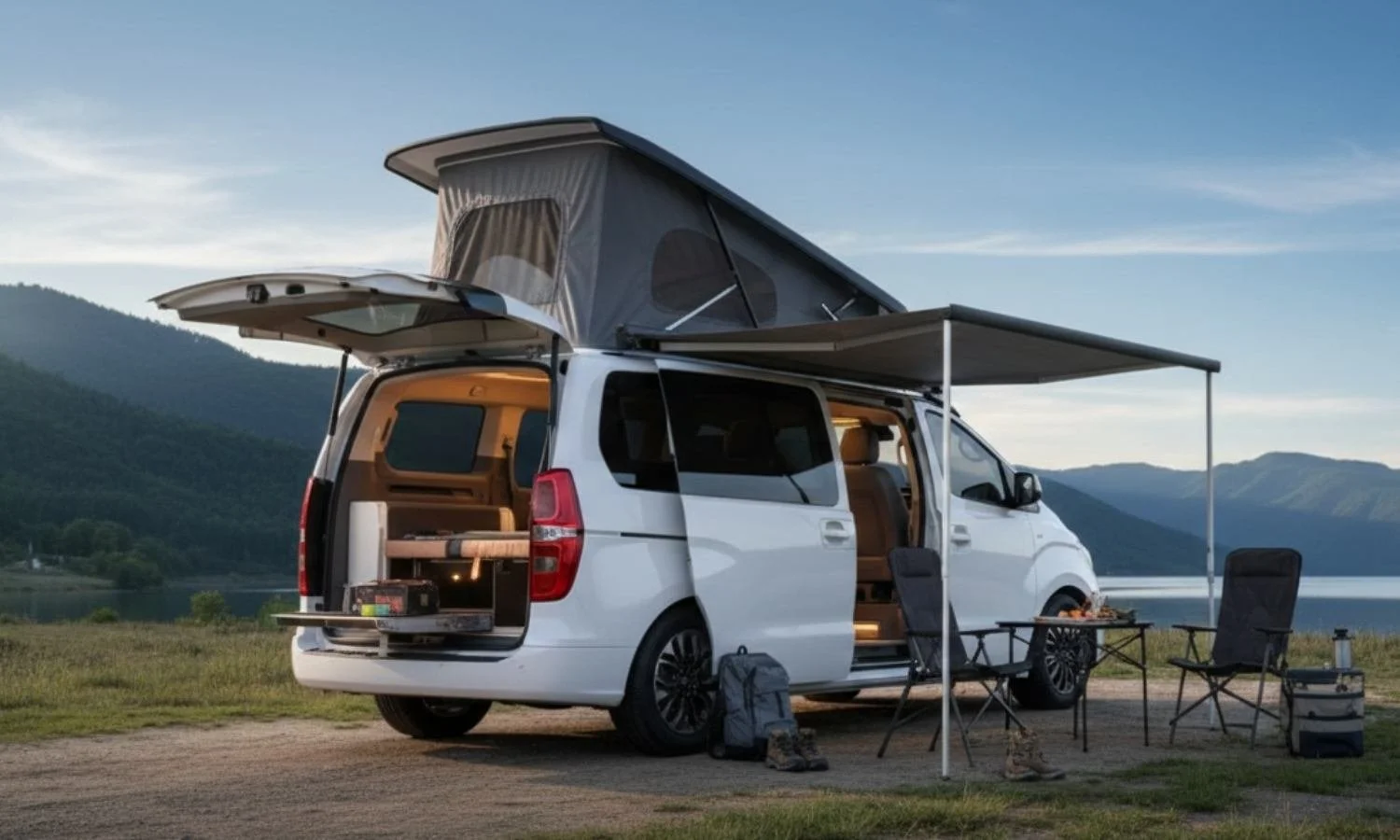
Hyundai’s Staria Camper Concept: A Space-Age Electric Camper Van With Old-School Practicality
A Hyundai camper van sounds like a novelty in North America, but elsewhere it’s part of everyday life. Hyundai sells vans in many global markets, including the futuristic-looking Staria—and recently it showed off a Staria Camper Concept at a major camping show in Germany. Think of it as a modern, electric take on the classic “small van, big weekends” formula that made pop-top camper vans famous.
For travelers who like the idea of a nimble van that can slip into a standard parking spot, handle scenic backroads, and still offer a real place to cook and sleep, this concept is worth a closer look.
A Van Designed Like Tomorrow, Built for Everyday Camp Life
The Staria’s styling is decidedly space-age, but the camper conversion is rooted in practical camper van design. Hyundai’s concept uses an electric platform (with an 85 kWh battery) and leans into the advantages of EV living: quiet nights, instant heat without burning fuel, and the ability to power onboard systems directly from the traction battery.
This isn’t just “add a mattress and call it a camper.” The concept includes a pop-top roof for standing room and added sleeping space—an approach that has long been popular with compact camper vans in Europe because it preserves a manageable footprint while improving livability.
Inside, the layout aims for flexibility. The rear seating folds flat to create a bed platform, and there’s generous counter space for basic meal prep—exactly the kind of simple setup that works well for a few nights at camp. The front seats also swivel to face the cabin, turning the van into a small lounge when parked.
Off-Grid Comfort: Heat Pump HVAC, Fridge, and a Portable Shower
What makes this concept especially interesting for the camper van industry is the off-grid focus. Hyundai highlights an electric heat-pump HVAC system, which can be more efficient than traditional electric resistance heating. In plain terms: it’s a smarter way to stay comfortable without draining the battery as quickly.
The concept also includes a fridge and a portable shower—two amenities that matter in real travel, especially when you’re not hopping from hotel to hotel. Picture a long weekend based out of a campground near water and trails, with the van serving as your basecamp for early starts and late dinners.
A setup like this pairs naturally with classic van destinations. In the U.S., for example, a compact camper van is often the easiest way to explore road-trip mainstays like Yosemite National Park (think tight parking and busy valley roads) or route-based travel through iconic landscapes like Zion National Park.
Solar on the Roof: Useful, But Not Magic
Hyundai says the Staria Camper Concept uses 520W of solar panels, estimating about 2.6 kWh generated per day with around five hours of sunlight. In the real world, solar output depends on season, shade, cloud cover, and how you park. Still, roof solar can meaningfully support day-to-day loads—charging devices, running lights, topping up auxiliary needs—especially if the camper’s electrical system is designed with energy efficiency in mind.
Solar also encourages a slower rhythm of travel: park earlier, face the sun when possible, and spend the afternoon outside instead of idling an engine. If you’ve ever camped somewhere sunny and quiet—say at California’s Joshua Tree National Park—you can see the appeal of a low-noise camper van setup that doesn’t revolve around fuel stops.
Smart Glass for Privacy: A Clever Touch for Campgrounds
One of the concept’s most thoughtful ideas is smart glass in place of traditional rear windows. With electronic tinting, you can brighten the interior when you want daylight and quickly switch to privacy mode when you don’t.
That matters in the places camper vans often spend the night: campgrounds, trailhead lots, and tight scenic pullouts. Anyone who has cooked dinner in a busy campground knows the value of being able to let light in while still feeling tucked away. A feature like this could be especially welcome at popular, well-managed campgrounds such as Watchman Campground near Zion, where sites are close and evenings are lively.
Will Hyundai Build It—and Will It Ever Come to North America?
Hyundai has presented this as a concept and is gauging interest. In Europe, factory-built camper vans are a serious market, and buyers expect clever packaging in a small footprint. If Hyundai decides to move forward, it could put real pressure on established players by offering an EV camper van that’s designed from the start with camping in mind.
The big question for North American travelers is availability. The Staria itself isn’t sold here today, and regulations, dealer networks, and market strategy all influence what reaches U.S. and Canadian roads.
Try the Camper Van Lifestyle Now (No Waiting on Concepts)
Even if the Staria Camper remains a “someday” vehicle, the travel style it represents—compact, comfortable, easy to park, and ready for national parks—can be enjoyed right now. If an efficient camper van with simple amenities and a road-trip-friendly footprint sounds like your kind of trip, book a camper van rental with altCamp and start planning a route that favors campsites, trailheads, and scenic drives over check-in desks.