Your First Camper Van Rental: What to Know Before You Go
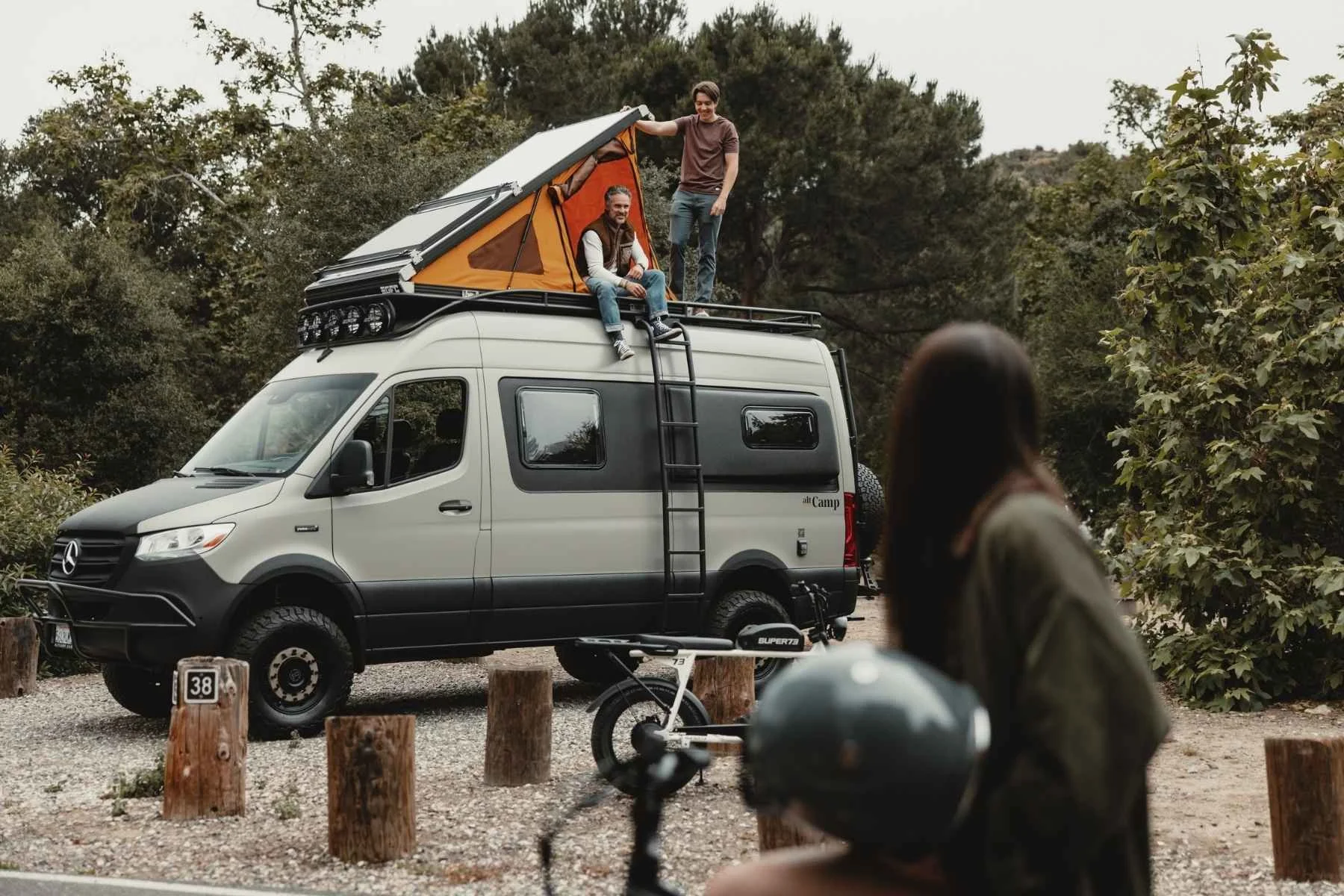
Featured: altCamp’s ‘The 77’ from their luxury Signature Collection fleet.
A camper van rental puts a bedroom, kitchen, and living room on wheels, and if it's your first time, there's a short learning curve that's worth knowing about before you pick up the keys. Most first-timers figure it out fast, but a little prep goes a long way toward skipping the rookie mistakes that can derail an otherwise great trip.
How Much Does It Cost to Rent a Camper Van?
The most common question before booking is how much does it cost to rent a camper van, and the honest answer is: it depends on the van, the market, and the season. Budget-friendly, older conversions (often DIY) typically run $100–$175 per night. A well-appointed, newer Class B RV — think a high-roof Mercedes-Benz Sprinter with a real bed, solar, and a kitchenette — will land closer to $225–$325 per night. The best-of-the-best rigs will exceed $400 per night. On altCamp, you can browse listings across that full range, from budget-friendly to tricked-out luxury builds.
Beyond the nightly rate, factor in mileage overage fees (many listings include 100–150 miles per day, with $0.25–$0.75 per additional mile), a security deposit (usually $500–$1,500 held on your card), rental insurance (usually $40 to $80 per day), and any generator or propane usage charges if the van isn't solar-equipped. Our guide to how much it costs to rent a conversion van breaks the full cost picture down in more detail.
Choose the Right Van for Your Trip
The most important decision you'll make is matching the van to your actual itinerary. A compact conversion van is easy to drive and park, but won't have a standing-height ceiling and might not have a built-in kitchen. A high-roof Sprinter van conversion, on the other hand, gives you a lot more livability — usually a fixed bed, a propane or induction cooktop, a sink with fresh water, enough storage for a long term trip, and soemtimes a built-in shower— but it will be longer and higher than a typical sedan, so parking garages and some campsite pull-throughs can be tight.
Ask yourself: How many people are coming? Camper vans are ideal for two to four people. Anything beyond that, you may want to consider a larger RV. We’ve found the sweet spot to be two adults and two children. Another thing to consider is your camping style. If you're planning to stay at established campgrounds with hookups — like those bookable through Recreation.gov — you won't need the same off-grid solar capacity as someone planning to free-camp on BLM land. Our guide to choosing the right campervan rental walks through this decision in depth.
Understand What's Actually Included
One of the most common first-timer surprises is showing up to pick up a van and realizing the bedding, towels, and kitchen supplies aren't included. Some hosts include a full linen kit and a stocked kitchen; others hand you the keys and wish you well. Read the listing description carefully and message the host before your trip if anything is unclear. A quick checklist to confirm: bedding and pillows, towels, kitchen basics (cutting board, pots, utensils), a camp chair or two, and any gear the listing photo shows but doesn't explicitly list.
Also confirm how the van handles power. Many newer conversions have rooftop solar and a lithium battery bank capable of running lights, a fan, a 12V fridge, and charging devices for several days without hookups. If the listing doesn't mention solar or shore power, assume you'll need to be strategic about electricity use — or book a campsite with electrical hookups.
Learn the Basics Before You Drive Off
You don't need a special license to drive a camper van in the U.S. — a standard driver's license is fine for any Class B RV — but you should give yourself 15–30 minutes to do a proper walkthrough with the host before leaving the lot. Ask them to walk you through the water system (how to fill and drain fresh and gray water tanks), the propane or electrical setup, and how to connect to shore power at a campground. You'll also want to know where the fuse box is and how to check tire pressure. Our post on whether you need a special license to drive a camper van covers what to expect behind the wheel.
Driving a full-size Sprinter van feels noticeably different from a passenger car. The wheelbase is longer, the roof is higher (standard Sprinters are around 9 feet tall — watch low-clearance structures), and the turning radius is wider. Plan your route with height restrictions in mind if you're going through a city. Apps like Hipcamp are useful for finding campgrounds that can accommodate a full-size van and include user-reported details about road conditions and site size.
Plan Your Campgrounds in Advance (Especially in Summer)
One of the biggest mistakes first-timers make is treating a camper van rental like a hotel — assuming they'll figure out where to sleep each night on the fly. In summer, campgrounds at popular destinations fill months in advance. Yosemite, Zion, Moab, and most coastal California spots can be fully booked by the time you search. Use Recreation.gov and each state's reservation system to lock in nights before your trip. Dispersed camping on public land (BLM or National Forest) is a good backup option, and our post on how to find free and legal overnight parking covers exactly how to do that. If you're planning a route through popular van travel territory — Denver, Portland, or San Francisco — having at least your first and last nights locked in takes a lot of pressure off.
Pack Light, Pack Smart
A camper van has real storage, but it's not unlimited. The biggest first-timer packing mistake is overloading on gear that doesn't earn its place. A solid packing framework: prioritize what you'll use every single day (clothes for the weather, coffee setup, toiletries), then layer in activity-specific gear (hiking boots, surfboard, fishing rod), and cut anything in the "just in case" pile. Roof racks and hitch cargo carriers can add meaningful extra capacity if the van is equipped for them — check with the host.
One thing worth adding to any first van rental: a portable power bank for devices and a USB-C car charger. Most camper vans charge through the 12V system, but having a backup is smart on days when you're not driving.
The Payoff Is Worth It
Renting a camper van for the first time requires a little more planning than booking a hotel, but the experience — waking up at a trailhead, cooking breakfast with a view, and not having to pack and unpack a bag every day — makes the logistics feel like a small price. Use these van rental tips as your starting point, and browse altCamp.com to find camper van listings near your home city or your destination.